A Quick Guide to SMAW (Stick Welding)
In Calgary’s industrial, construction, and repair sectors, few welding processes are as reliable and versatile as SMAW—Shielded Metal Arc Welding, commonly known as stick welding. Whether you’re working on heavy equipment, structural steel, pipelines, farm machinery, or on-site repairs in difficult conditions, SMAW remains one of the most trusted welding methods in Alberta.
This comprehensive guide explores how SMAW works, best practices for strong structural welds, the most common electrode types, polarity differences, and where stick welding is used across Calgary’s residential, commercial, and industrial markets.
What Is SMAW (Stick Welding)?
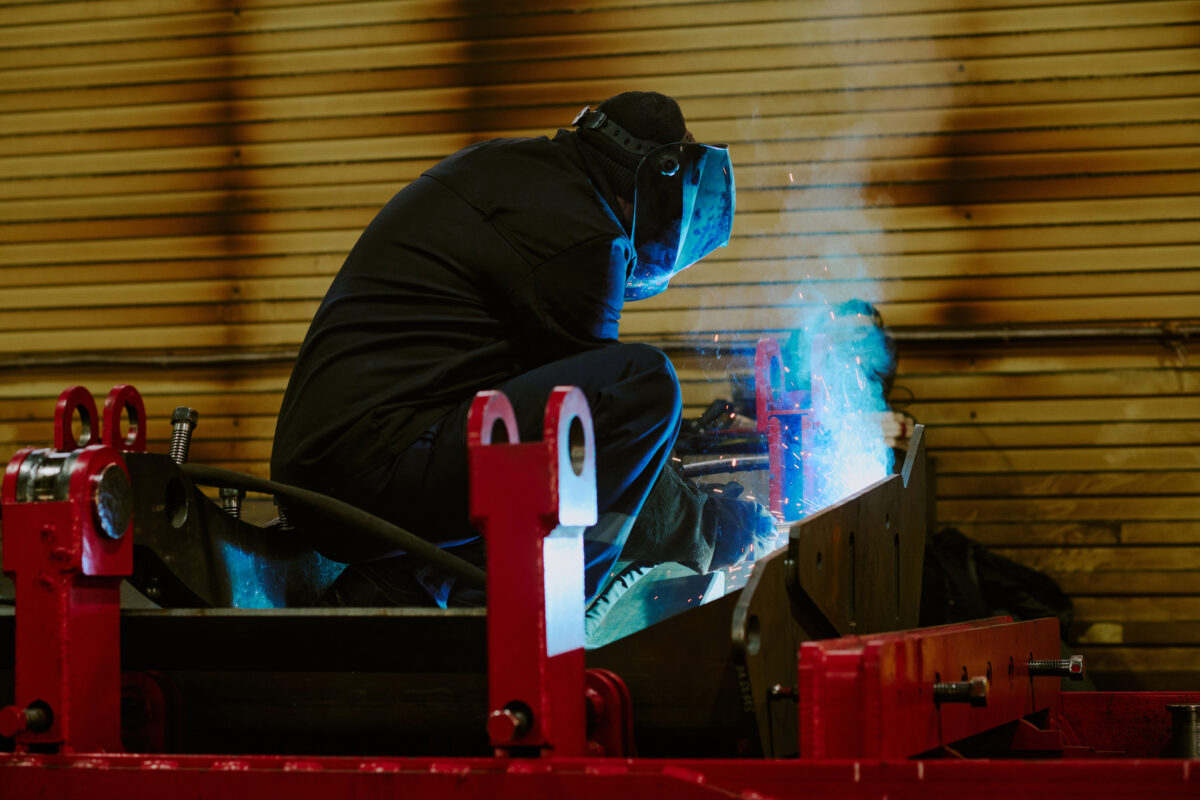
SMAW (Shielded Metal Arc Welding) is a manual welding process that uses a flux-coated consumable electrode, commonly called a “stick rod.”
When the rod strikes the metal, it creates an electric arc that melts both the base metal and the electrode, forming a strong weld pool.
The key advantage of SMAW is that it does not require external shielding gas. Instead, the electrode’s flux coating releases gases and forms a protective slag that shields the weld from atmospheric contamination.
This makes stick welding extremely useful in locations where MIG or TIG welding cannot be used, such as:
- Outdoor worksites
- Windy conditions
- Dirty environments
- Remote areas
- Industrial shutdown work
Why Stick Welding Is So Popular
Calgary’s diverse industries—including oil & gas, construction, heavy equipment, agricultural operations, manufacturing, and fabrication shops—rely heavily on SMAW because of its:
✔ Versatility
Works on steel, cast iron, stainless steel, hardfacing, pipelines, and heavy structural components.
✔ Portability
Only requires a welding machine and rods—no gas cylinders, hoses, or wire feeders.
✔ Performance Outdoors
Handles wind, moisture, and dirt much better than TIG or MIG.
✔ Deep Penetration
Many SMAW electrodes deliver strong, structural-grade penetration ideal for heavy steel.
✔ Cost-Efficiency
Equipment setup is simple, inexpensive, and easy to maintain.
How SMAW (Stick Welding) Works
Stick welding is simple in concept but requires skill, technique, and electrode knowledge to master. Here’s how the SMAW process works:
1. Power Source & Polarity
SMAW uses either:
- AC (alternating current)
- DCEP (direct current electrode positive)
- DCEN (direct current electrode negative)
Electrode type determines the correct polarity. Rods like 7018 typically use DCEP, while rods like 6013 and 6011 may use AC or DC.
Correct polarity affects:
- Arc stability
- Penetration
- Weld bead appearance
- Spatter levels
2. Striking the Arc
The welder starts the arc using:
- A tap technique, or
- A scratch technique (like striking a match)
Once the arc starts, the rod and base metal melt into a controlled weld puddle.
3. Flux Coating Activation
The flux coating burns and produces:
- Shielding gas → protects molten metal
- Slag layer → solidifies on top of the weld
- Arc stabilizers → regulate arc performance
- Alloying elements → improve weld metal strength
This self-shielding feature is what makes SMAW ideal for outdoor and remote locations.
4. Weld Pool Formation
As the rod melts, it adds filler metal to the joint. The welder controls:
- Rod angle
- Travel speed
- Arc length
- Heat input
- Puddle size
Proper technique creates a smooth, strong weld.
5. Slag Removal
Once the weld cools slightly, the slag is removed with:
- A chipping hammer
- A wire brush
Removing slag reveals the finished bead and prepares the surface for additional weld passes.
Best Practices for Strong, Clean SMAW Welds
Professional welders follow strict techniques to ensure structural integrity and aesthetic weld quality:
🔧 Maintain the right arc length
Too long → spatter, undercut, porosity
Too short → sticking, unstable arc
🔧 Use the correct rod angle
Typically 10–15° drag angle depending on joint type.
🔧 Control travel speed
Slow = excessive buildup
Fast = poor penetration
🔧 Keep electrodes dry
Moisture causes porosity and hydrogen cracking.
Rods like 7018 should be stored in a rod oven.
🔧 Prep the metal properly
Although SMAW tolerates dirt better than TIG/MIG, cleaner metal always results in stronger welds.
🔧 Match amperage to the rod diameter
Example amperage ranges:
- 1/8″ 7018: 90–140 amps
- 1/8″ 6010: 70–120 amps
Common SMAW Electrode Types and Their Applications
SMAW rods vary widely in performance. Here are the most common electrodes used in Calgary fabrication and repair work:
E6010 – Deep Penetrating Pipe & Root Pass Rod
Good for:
- Root passes
- Pipeline welding
- Dirty, rusty metal
- Out-of-position welding
Advantages:
- Fast-freeze puddle
- High penetration
- Great for vertical and overhead
E6011 – AC-Compatible Version of 6010
Good for:
- Farm equipment
- Maintenance welding
- Sheet metal repairs
- AC welders
Advantages:
- Works on AC machines
- Good for beginners
- Great on dirty steel
E6013 – Smooth, Clean Beads
Common uses:
- General fabrication
- Thin metal
- Fencing
- Automotive sheet metal
Advantages:
- Soft, stable arc
- Minimal spatter
- Cleaner weld appearance
E7018 – Low Hydrogen Structural Rod
The most popular rod in Calgary construction.
Used for:
- Structural steel
- Heavy equipment
- Buildings and bridges
- High-strength applications
- Pressure vessels
Advantages:
- Smooth bead profile
- Strong, low-hydrogen weld
- Excellent for critical welds
Note: Must be kept dry—requires rod oven storage.
E7024 – High-Deposition Iron Powder Rod
Used for:
- Long flat welds
- Fillet welds
- High-production work
Advantages:
- Extremely high deposition rate
- Heavy, smooth weld beads
Common Applications of Stick Welding
SMAW is used daily across Calgary’s trades, fabrication shops, and industrial operations because it excels where other processes struggle.
1. Heavy Equipment Repair
Ideal for:
- Excavator buckets
- Loader arms
- Dozer blades
- Frames and booms
- Hardfacing applications
SMAW’s penetration and outdoor reliability make it perfect for field repairs.
2. Oil & Gas and Pipeline Work
Stick welding is a standard in Alberta’s energy sector for:
- Pipeline construction
- Station repairs
- Pressure piping
- Facility maintenance
Rods like 6010 and 7018 dominate this category.
3. Structural Steel and Construction
Used for:
- I-beams
- Columns
- Stair stringers
- Support frames
- Building erection
Low-hydrogen rods provide the strength required for engineered steel structures.
4. Fabrication & Manufacturing
Stick welding is useful in shop environments for:
- Brackets
- Heavy frames
- Machinery bases
- Industrial components
5. Farm, Ranch, and Rural Welding
Perfect for:
- Fencing
- Implements
- Trailers
- Gates
- Repair work
SMAW is reliable even in mud, wind, and low-visibility environments.
6. Cast Iron Welding
Specialized electrodes allow stick welding to repair:
- Engine blocks
- Machinery housings
- Brackets and mounts
Why Calgary Businesses Trust SMAW Welding Services
SMAW remains a cornerstone of welding because it offers:
- Strong, deep penetrating welds
- Excellent performance outdoors
- Versatility for multiple metals
- Highly portable equipment
- Cost-effective, dependable repairs
For heavy-duty work where reliability matters, stick welding is still one of the most trusted welding processes available.
Need SMAW Welding Services in Calgary? We’re Here to Help
Whether you’re dealing with:
- Structural welding
- Heavy equipment repairs
- On-site field welding
- Farm machinery repairs
- Industrial maintenance
- Pipeline work
- Stick welding fabrication
Professional SMAW services ensure your steel structures and equipment receive durable, code-compliant welds that last.