Mon – Sat: 7:00am – 6:00pm

Posts by admin

Understanding Straight vs. Reverse Polarity in Welding: A Guide from Calgary’s Welding Experts

When it comes to welding, whether you’re working on aluminum fuel tanks, structural steel, or heavy equipment — understanding welding polarity is essential for strong, clean, and efficient welds. At Fabrication Pros we get asked: What’s the difference between straight and reverse polarity — and which one should I use?

In this post, we’ll break down the science behind welding polarity and explain how it affects penetration, bead profile, and weld quality.


🔧 What Is Welding Polarity?

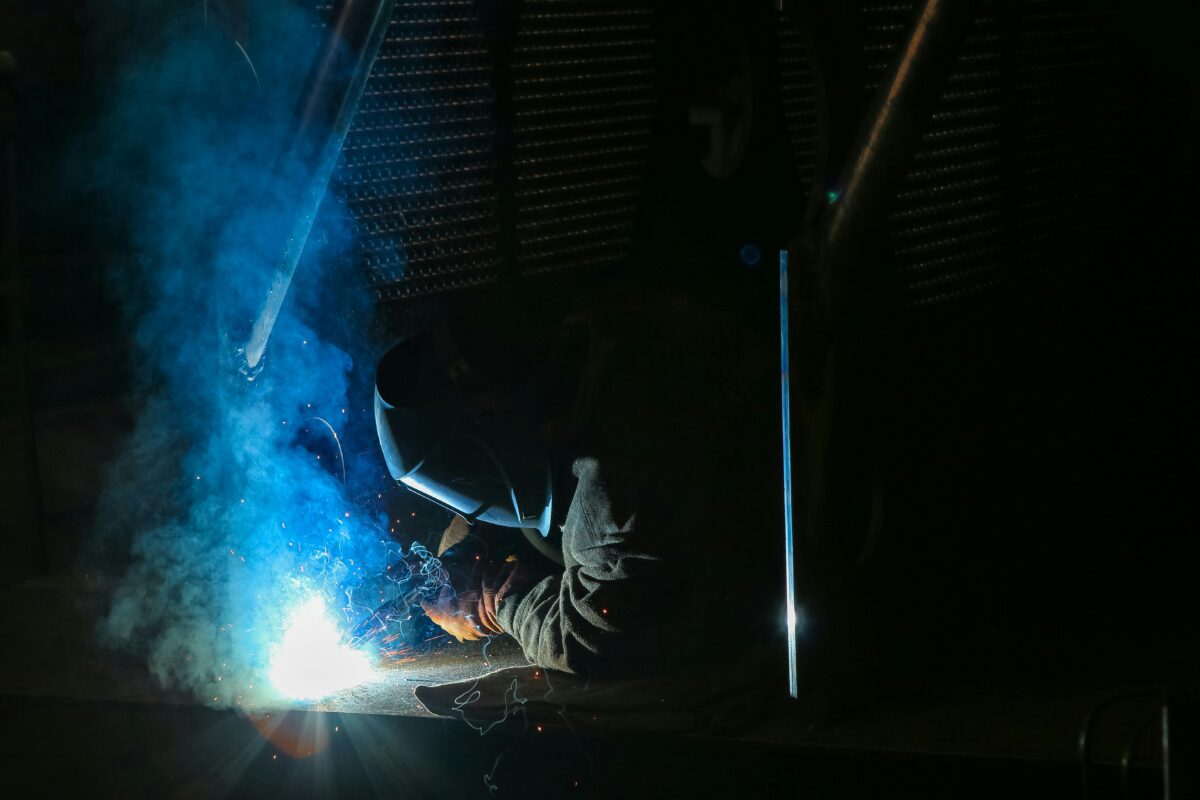
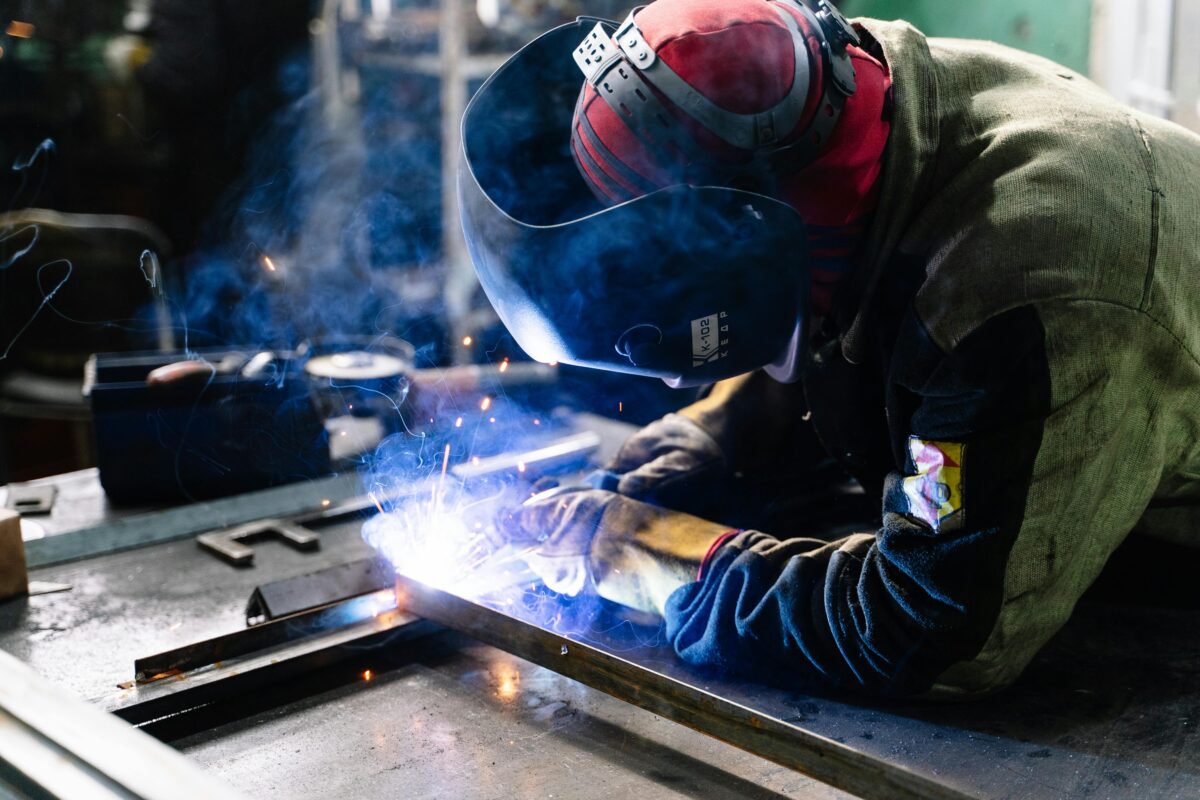
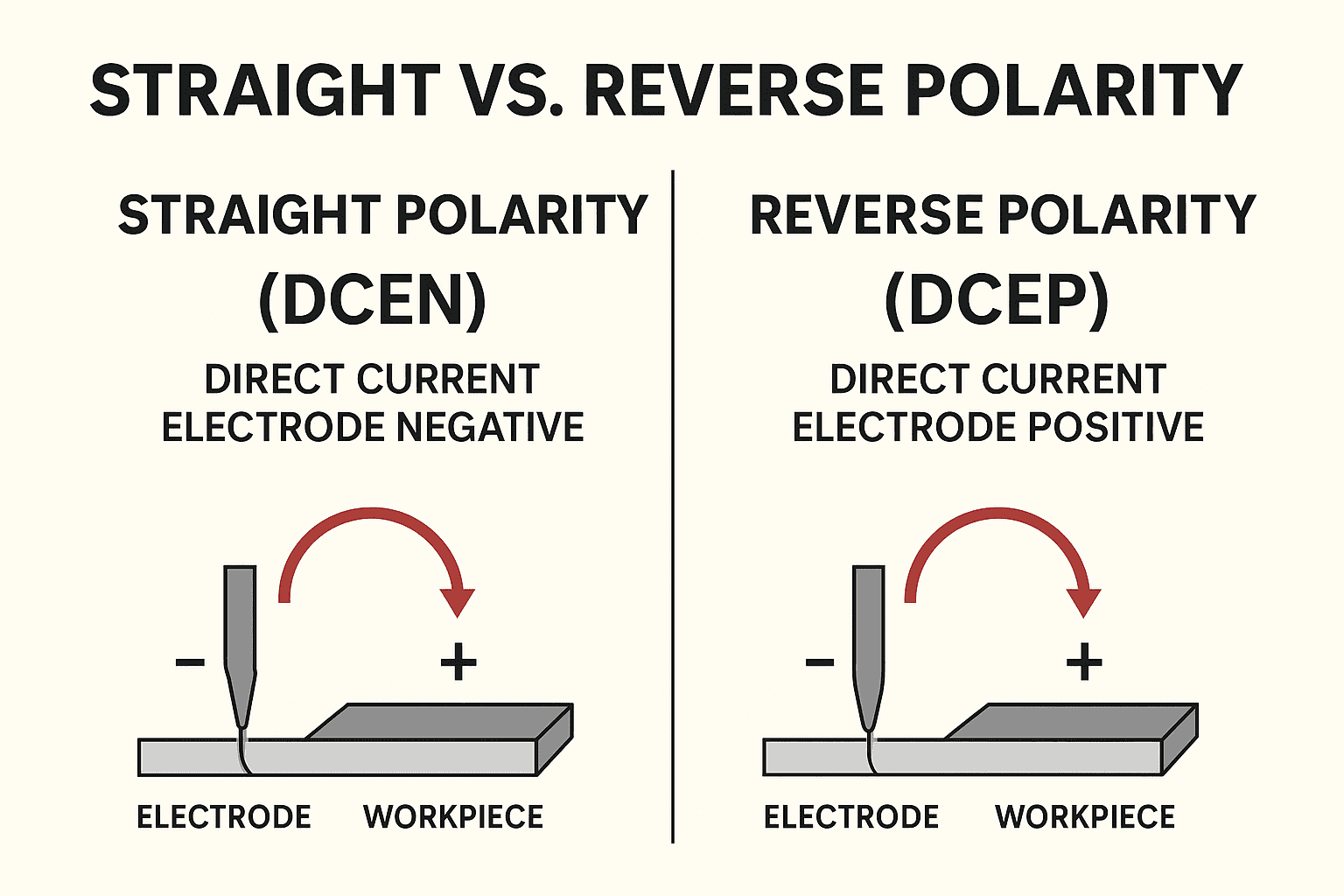
Welding polarity refers to the direction of current flow in a welding circuit. In any DC (direct current) welding setup, electricity flows from the negative terminal to the positive terminal. By switching which side the electrode connects to, welders can change how heat is distributed between the electrode and the workpiece.

There are two main types of polarity used in DC welding:

  • Straight Polarity (DCEN) – Direct Current Electrode Negative
  • Reverse Polarity (DCEP) – Direct Current Electrode Positive

Straight Polarity (DCEN) – Deep Penetration for Heavy Welding

In straight polarity, the electrode is negative and the workpiece is positive. About two-thirds of the heat is concentrated on the workpiece, providing deeper penetration and faster material fusion.

✅ Best For:

  • TIG (GTAW) welding aluminum or stainless steel
  • Thicker materials
  • Pipe welding and structural applications

⚡ Key Benefits:

  • Deep weld penetration
  • Faster travel speeds
  • Less electrode consumption

⚠️ Things to Watch:

  • Can produce a narrower bead
  • Not ideal for thin materials (risk of burn-through)

🔄 Reverse Polarity (DCEP) – Cleaner Welds and Better Fusion

In reverse polarity, the electrode is positive, and the workpiece is negative. This reverses the heat distribution — now, most of the heat is concentrated on the electrode tip. The result is shallower penetration but better surface cleaning due to the electron flow that removes surface oxides.

✅ Best For:

  • MIG (GMAW) welding aluminum and mild steel
  • Welding thin sheet metal
  • Welds that require clean, smooth beads

⚡ Key Benefits:

  • Excellent cleaning action
  • Reduced spatter
  • Smooth, consistent weld appearance

⚠️ Things to Watch:

  • Lower penetration depth
  • Slightly slower welding speed

🧰 Choosing the Right Polarity for the Job

The right polarity depends on the material type, thickness, and welding process:

Welding ProcessRecommended PolarityTypical Use
TIG (GTAW)Straight Polarity (DCEN)Aluminum, stainless, precision work
MIG (GMAW)Reverse Polarity (DCEP)General fabrication, automotive, sheet metal
Stick (SMAW)Depends on Electrode TypeVaries by rod type (E6010 uses DCEP, E6013 can use both)

If you’re unsure which polarity to use, consult your electrode manufacturer’s datasheet or reach out to an experienced welding technician — using the wrong polarity can cause weak welds, excess spatter, or porosity.


🏗️ Calgary’s Trusted Welding Professionals

At Fabrication Pros we specialize in mobile and in-shop welding services throughout Calgary and Southern Alberta. From heavy equipment repairs and bucket hard facing to aluminum fuel tank welding, our certified rig welders ensure every weld meets the highest safety and performance standards.

Whether you need expert advice on welding polarity or on-site repairs, our team is here to help.


📞 Get in Touch

Looking for a professional Calgary welding company?
Contact Fabrication Pros today for reliable, certified, and locally trusted welding solutions.
Read more

Expert Aluminum Diesel Fuel Tank Repair in Calgary, Alberta

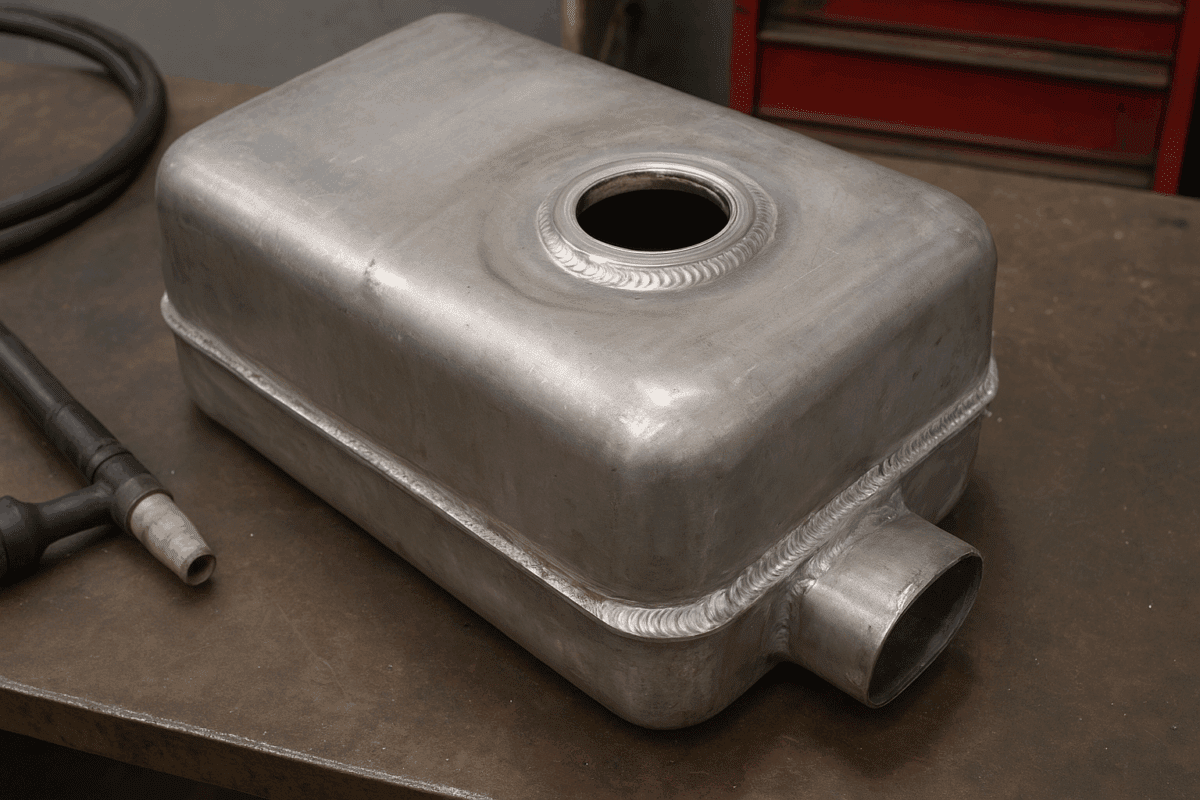
When your diesel fuel tank develops a leak, crack, or corrosion issue, you need a trusted Welding company in Calgary that understands aluminum repair inside and out. At Fabrication Pros, we specialize in aluminum fuel tank repair and fabrication for trucks, heavy equipment, industrial machinery, and marine applications across Alberta.

Whether it’s a small pickup fuel tank or a large diesel reservoir from a commercial rig, our certified welders provide precise, professional repairs that save you time and money — without compromising safety or quality.


Why Aluminum Fuel Tanks Require Specialized Repair

Aluminum fuel tanks are known for being lightweight, corrosion-resistant, and strong — but over time, they can still develop damage due to vibration, road debris, or fatigue. Unfortunately, not every welder is equipped to repair aluminum correctly.

At [Your Company Name], we use TIG (GTAW) welding techniques designed specifically for aluminum, ensuring clean, controlled welds that restore tank integrity without contamination. Our team follows strict safety standards and performs pressure testing on every repair to guarantee leak-free performance.

Common issues we repair include:

  • Cracked or punctured aluminum tank walls
  • Weld seam failures and leaks
  • Corrosion or pitting from moisture or road salt
  • Damaged mounting brackets or fittings
  • Custom modifications and re-welds

Our Aluminum Tank Repair Process

Every fuel tank repair in our Calgary welding shop begins with a thorough inspection. We identify the root cause of damage, clean the affected area, and remove contaminants before welding.

Next, we use high-grade 4043 or 5356 aluminum filler rod, depending on the tank’s composition, to ensure maximum strength and corrosion resistance. After the repair is completed, we pressure test and seal-check the tank to ensure it meets — or exceeds — original safety standards.

We work on:

  • Highway truck fuel tanks
  • Agricultural and industrial diesel tanks
  • Construction equipment fuel cells
  • Marine and RV aluminum tanks
  • Custom aluminum reservoirs

Mobile Welding Services Available

Can’t bring your equipment to our Calgary shop? No problem. We offer mobile aluminum welding services throughout Calgary, Airdrie, Okotoks, Cochrane, and surrounding Alberta areas. Our rig welders are equipped for on-site fuel tank repairs — perfect for fleet vehicles, heavy equipment, and work trucks that can’t afford downtime.


Why Choose Fabrication Pros?

  • Certified Aluminum Welders – Skilled in GTAW/TIG welding for high-precision tank repair.
  • Locally Owned and Operated in Calgary – We’re proud to serve Alberta’s industries with dependable service.
  • Fast Turnaround Times – Get your tank back in service quickly with minimal disruption.
  • Affordable and Honest Pricing – Clear estimates, no hidden costs.
  • Safety and Quality Guarantee – Every tank is leak-tested and certified safe before return.

Extend the Life of Your Aluminum Fuel Tank

Instead of replacing your fuel tank, let our experienced welders bring it back to life. With proper aluminum welding repair, you can extend the life of your diesel tank for years and avoid the high cost of replacement.

If you’re looking for professional aluminum welding in Calgary, trust the experts who understand the metal, the machines, and the importance of getting it done right.

Read more

5356 vs. 4043 Aluminum Electrodes: What’s the Difference?

Calgary’s Trusted Welding Experts Explain How to Choose the Right Filler Metal

When welding aluminum, choosing the right electrode or filler rod can make all the difference in the strength, appearance, and performance of your weld. For welders and fabricators in Calgary, Alberta, two of the most common choices are 5356 aluminum electrodes and 4043 aluminum electrodes.

While they may look similar, these two filler metals behave very differently — and choosing the wrong one for your application can lead to cracking, corrosion, or weak joints. At Fabrication Pros, Calgary’s local mobile and rig welding specialists, we’re breaking down the key differences between 5056 and 4043 aluminum to help you make the right choice for your project.


Understanding Aluminum Filler Metals

Aluminum is lightweight, strong, and corrosion-resistant — but it’s also one of the more challenging metals to weld. Different aluminum alloys require specific filler materials that match or complement their composition.

That’s why choosing between 5356 and 4043 aluminum filler metals isn’t just about preference — it’s about ensuring weld integrity and long-term performance.


4043 Aluminum Electrodes: The Go-To for General Aluminum Welding

4043 is one of the most widely used aluminum filler materials in welding. It’s an aluminum-silicon alloy, containing around 5% silicon, which gives it excellent flow characteristics and crack resistance.

Key Benefits of 4043 Aluminum:

  • Excellent fluidity — easier to work with for smooth, clean weld beads
  • Reduced cracking risk due to added silicon
  • Good color match when anodized (light gray finish)
  • Compatible with 3000, 4000, 6000 series aluminum alloys

Common Uses:

  • General aluminum fabrication and repair
  • Automotive and trailer manufacturing
  • Welding aluminum piping and sheet metal
  • Ideal for welding 6061 aluminum and other 6xxx alloys

4043 is often the best choice for structural and aesthetic aluminum welding because of its smooth bead appearance and minimal risk of hot cracking — a major advantage for custom fabrication and repair work.


5356 Aluminum Electrodes: Designed for Strength and Corrosion Resistance

5356 aluminum filler metal is an aluminum-magnesium alloy, containing about 5% magnesium. It’s specifically engineered for high-strength, corrosion-resistant welds, especially in marine or outdoor applications.

Key Benefits of 5356 Aluminum:

  • Superior strength compared to 4043
  • Outstanding corrosion resistance, especially in saltwater or harsh environments
  • Tougher welds ideal for heavy-duty or load-bearing projects
  • Compatible with 5052, 5083, 5652, and other magnesium-bearing alloys

Common Uses:

  • Marine and boat fabrication
  • Truck bodies and aluminum trailers
  • Irrigation systems and outdoor structures
  • Industrial and heavy equipment applications

However, it’s important to note that 5356 can be more prone to cracking when used on certain non-magnesium alloys (like 6061), making filler selection critical.


The Key Difference Between 4043 and 5356

Feature4043 Aluminum5356 Aluminum
Alloy TypeAluminum-SiliconAluminum-Magnesium
StrengthModerateHigh
Corrosion ResistanceGoodExcellent
Crack ResistanceExcellentModerate
DuctilityHigherLower
Typical ApplicationsGeneral fabrication, automotiveMarine, transport, structural
Weld AppearanceSmooth, brightSlightly duller, stronger bead

Choosing the Right Electrode for Your Job

If your project requires maximum strength and corrosion resistance, especially in marine or outdoor environments, 5356 aluminum electrodes are your best choice.

If you’re working on general fabrication, repair work, or welding 6xxx series aluminum, 4043 electrodes will give you cleaner welds, easier workability, and better crack resistance.

When in doubt, consult a qualified welder or welding engineer who understands how filler metal selection affects performance, especially under Alberta’s tough working conditions.


Professional Aluminum Welding Services in Calgary, Alberta

At Fabrication Pros, we provide expert aluminum welding, fabrication, and repair services for contractors, industrial operators, and equipment owners throughout Calgary and Southern Alberta.

Our certified rig welders use the right electrodes, processes, and techniques for your specific alloy and application — ensuring strong, clean, and long-lasting welds every time.

Request a free quote online to learn how we can help with your aluminum welding and fabrication projects.

Read more

What Is Waffling on an Excavator Bucket — and How It Extends the Life of Your Equipment

When it comes to keeping your heavy equipment running at peak performance, few things matter more than proper maintenance and reinforcement. For companies in Calgary, Alberta’s construction, oilfield, and excavation industries, the harsh working conditions take a toll on your machinery — especially your excavator buckets. That’s where waffling comes in.

At Fabrication Pros, we specialize in Calgary welding services, hard facing, and waffling for excavator buckets and heavy equipment across Calgary and surrounding Alberta worksites. Here’s what waffling is, how it works, and why it’s one of the best ways to protect your investment.


What Is Waffling on an Excavator Bucket?

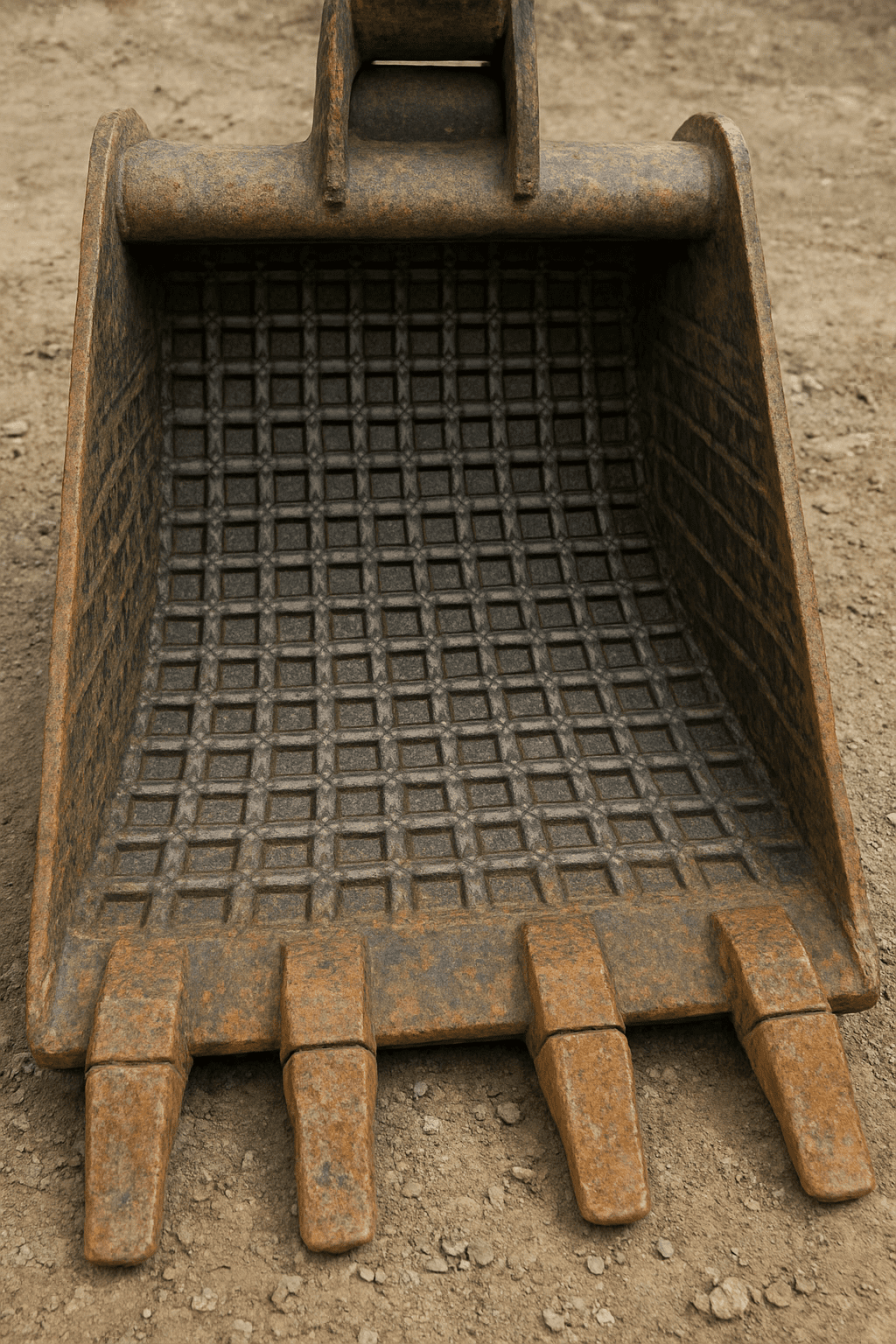
Waffling (sometimes called “bucket armouring”) is a reinforcement welding technique used to strengthen the surface of an excavator bucket. It involves welding a grid or crosshatch pattern of steel beads across high-wear areas — usually the bucket’s bottom, sides, and sometimes the back.

This pattern forms a tough, raised grid that looks similar to a waffle — hence the name. The welded beads are strategically applied to absorb and deflect impact, reduce abrasion, and create a buffer between the ground material and the bucket’s base metal.


How Waffling Protects and Extends the Life of Your Bucket

Excavator buckets are constantly exposed to rock, gravel, clay, and abrasive materials that wear down the steel surface over time. Without reinforcement, this can lead to thinning, cracks, and eventual failure.

Here’s how waffling helps:

  1. Distributes Impact Forces
    The raised grid pattern disperses stress evenly across the bucket’s surface, minimizing weak spots and cracking.
  2. Reduces Wear on Base Metal
    The welded steel beads act as sacrificial layers — they take the brunt of the abrasion instead of your bucket shell.
  3. Improves Bucket Strength and Rigidity
    The waffled pattern adds structural integrity, reducing flex and deformation under heavy loads.
  4. Lowers Maintenance Costs
    With proper waffling and hard facing, you’ll spend less on bucket replacements and downtime, keeping your equipment in the field longer.
  5. Customizable for Your Application
    Depending on the material you’re working in — whether it’s rocky foothills west of Calgary or clay-heavy job sites in southern Alberta — waffling patterns can be customized for optimal protection and performance.

Why Calgary Contractors Choose Local Welding Experts

In Alberta’s demanding excavation and construction environments, experience matters. At [Your Company Name], our certified rig welders and heavy equipment specialists understand the challenges of local conditions — from cold-weather operations to abrasive soils and high-hour equipment.

We use premium welding wire, advanced fabrication techniques, and mobile rig welding services to deliver durable results that stand up to the toughest jobs. Whether your equipment needs a bucket rebuild, hard facing, or waffling, we’ll help you extend the life of your assets and keep your crew working efficiently.


Protect Your Investment with Professional Bucket Waffling in Calgary, Alberta

If your excavator bucket is showing signs of wear or thinning, don’t wait until failure costs you downtime. Contact Fabrication Pros, Calgary’s trusted welding experts, for professional bucket waffling and repair services.

Call us today or Request a quote online to schedule a site visit or consultation.

Let’s keep your equipment working as hard as you do — with reliable, long-lasting welding solutions built for Alberta’s toughest conditions.

Read more

What Is SMAW Welding?

What Is SMAW Welding? A Complete Guide to Stick Welding

SMAW welding, short for Shielded Metal Arc Welding, is one of the most common and dependable welding processes used in the industry today. Often referred to as stick welding, SMAW is known for its versatility, strength, and reliability — making it ideal for structural steel, repair work, and outdoor projects.


How SMAW Welding Works

In SMAW welding, an electrode coated in flux is used to carry the electric current that creates an arc between the electrode and the base metal. This arc generates intense heat, which melts both the electrode and the workpiece to form a solid weld joint.

As the electrode melts, the flux coating releases shielding gases and forms a layer of slag over the weld. This protective layer prevents contamination from oxygen and moisture, ensuring a strong, clean weld once the slag is removed.

Because SMAW does not rely on external shielding gas, it performs exceptionally well in outdoor or windy conditions where other welding methods might struggle.


Advantages of SMAW Welding

SMAW remains one of the most popular welding techniques worldwide due to its durability and flexibility. Some of its top advantages include:

  • Versatile Applications: Works on a wide range of metals, including steel, stainless steel, cast iron, and alloy steel.
  • Portable and Flexible: Requires minimal equipment, making it ideal for on-site and field welding.
  • Strong, Reliable Welds: Produces deep weld penetration for long-lasting strength.
  • Cost-Effective: Simple equipment setup keeps costs low for both industrial and repair projects.
  • Excellent for Outdoor Use: Performs well in variable weather conditions, unlike MIG or TIG welding.

Common Uses for SMAW Welding

Because of its toughness and adaptability, SMAW is used across many industries and applications, including:

  • Construction and structural steel fabrication
  • Pipeline and pressure vessel welding
  • Agricultural and heavy equipment repair
  • Shipbuilding and offshore structures
  • Industrial maintenance and field services

SMAW vs. Other Welding Methods

Compared to GMAW (MIG welding) and GTAW (TIG welding), SMAW is more portable and better suited for heavy-duty work in challenging environments. While MIG and TIG produce cleaner and more precise welds, SMAW excels in strength, simplicity, and versatility — especially for repairs, construction, and outdoor applications.


Professional SMAW Welding Services

At Fabrication Pros, we provide professional SMAW welding services in Calgary for industrial, commercial, and structural projects. Our experienced welders deliver durable, high-quality welds that meet exact safety and performance standards — whether you need on-site repairs or new fabrication work.

Read more

What Is GMAW Welding?

What Is GMAW Welding? Understanding the MIG Welding Process

GMAW welding, short for Gas Metal Arc Welding, is one of the most widely used welding methods in the fabrication and manufacturing industries today. Commonly known as MIG welding (Metal Inert Gas), this process is valued for its speed, efficiency, and versatility, making it ideal for everything from automotive work to large-scale construction projects.


How GMAW Welding Works

In GMAW welding, a continuous wire electrode is fed through a welding gun, creating an electric arc between the wire and the metal surface. The heat from the arc melts both the wire and the base metal, forming a strong joint.

A shielding gas, typically argon, carbon dioxide, or a blend of both, protects the molten weld pool from atmospheric contamination — ensuring a clean, stable, and high-quality weld.

Because the wire is continuously fed, GMAW welding allows for faster weld speeds and longer continuous welds compared to other methods like TIG or stick welding.


Benefits of GMAW Welding

GMAW welding offers numerous advantages that make it one of the most popular choices across industries:

  • Fast and Efficient: The continuous wire feed allows for quick, consistent welding with minimal downtime.
  • Easy to Learn and Use: Suitable for both skilled professionals and beginner welders.
  • Versatile Applications: Works well on carbon steel, stainless steel, and aluminum.
  • Clean Results: Minimal spatter and post-weld cleanup.
  • Cost-Effective: High productivity and low waste make it an economical option for many projects.

Where GMAW Welding Is Used

Because of its reliability and adaptability, GMAW welding is used across a wide range of industries, including:

  • Automotive repair and manufacturing
  • Construction and structural steel fabrication
  • Equipment manufacturing and metal production
  • Custom metal fabrication and repair
  • Pipeline and industrial applications

GMAW vs. TIG Welding: What’s the Difference?

While TIG welding offers superior precision and aesthetics, GMAW welding stands out for its speed and productivity. TIG is ideal for thin materials and decorative welds, whereas GMAW is preferred for high-volume fabrication and thicker metals.

Choosing the right method depends on your project’s needs — whether that’s fine detail work or large-scale production.


Professional GMAW Welding Services

At Fabrication Pros, we specialize in GMAW welding services that deliver strong, consistent, and clean welds for projects of all sizes. Our Calgary welding company has extensive experience in the industry and is known for high quality welds. Our experienced welders use state-of-the-art equipment to ensure your components meet the highest standards of quality and durability.

Read more

What Is TIG Welding?

What Is TIG Welding? A Complete Guide for Precision Welding

TIG welding, also known as Gas Tungsten Arc Welding (GTAW), is one of the most precise and high-quality welding processes used in modern metal fabrication. It uses a non-consumable tungsten electrode to produce a clean, strong weld that’s ideal for projects requiring accuracy and visual appeal.

How TIG Welding Works

In TIG welding, an electric arc forms between a tungsten electrode and the metal being welded. The tungsten electrode does not melt; instead, it generates the heat needed to fuse the metals together. A shielding gas, typically argon or helium, protects the weld area from contamination and ensures a clean finish.

When necessary, a filler rod is added manually to strengthen the joint — giving the welder full control over the weld’s shape, depth, and quality.

Advantages of TIG Welding

TIG welding is known for producing high-quality, durable, and visually appealing welds. Here are some key benefits:

  • Precision and Control: Perfect for detailed and delicate work.
  • Clean and Spatter-Free Welds: Minimal cleanup and a smooth finish.
  • Versatility: Works with a wide range of metals, including stainless steel, aluminum, magnesium, copper, and titanium.
  • Strong, Reliable Bonds: Excellent for critical joints and structural applications.

Common Applications

TIG welding is widely used in industries that demand strength, precision, and a polished appearance, such as:

Why Choose TIG Welding for Your Project

If you need welding that combines accuracy, strength, and aesthetics, TIG welding is one of the best options available. Whether it’s a stainless steel railing, aluminum repair, or custom metal fabrication, TIG welding ensures a professional finish that lasts.

Read more
Verified by MonsterInsights