What Is GMAW Welding? Understanding the MIG Welding Process
Short answer
GMAW welding, short for Gas Metal Arc Welding, is one of the most widely used welding methods in the fabrication and manufacturing industries today. Commonly known as MIG welding (Metal Inert Gas), this process is valued for its speed, efficiency, and versatility, making it ideal for everything from automotive work to large-scale construction projects.
How GMAW Welding Works
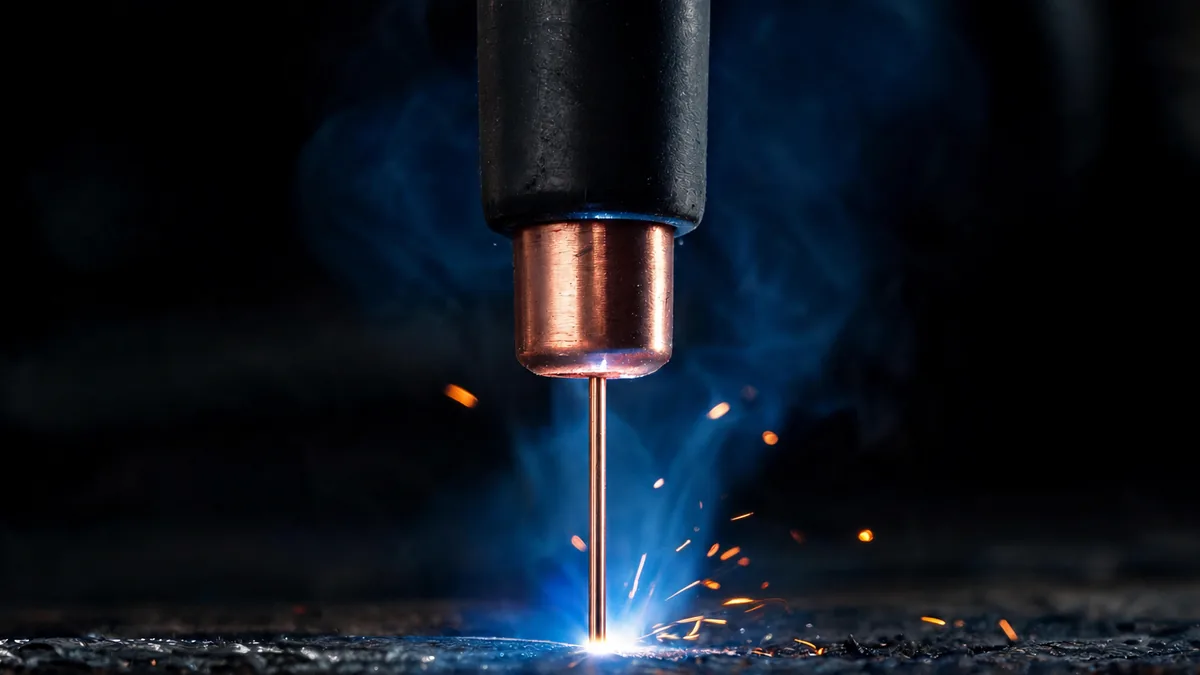
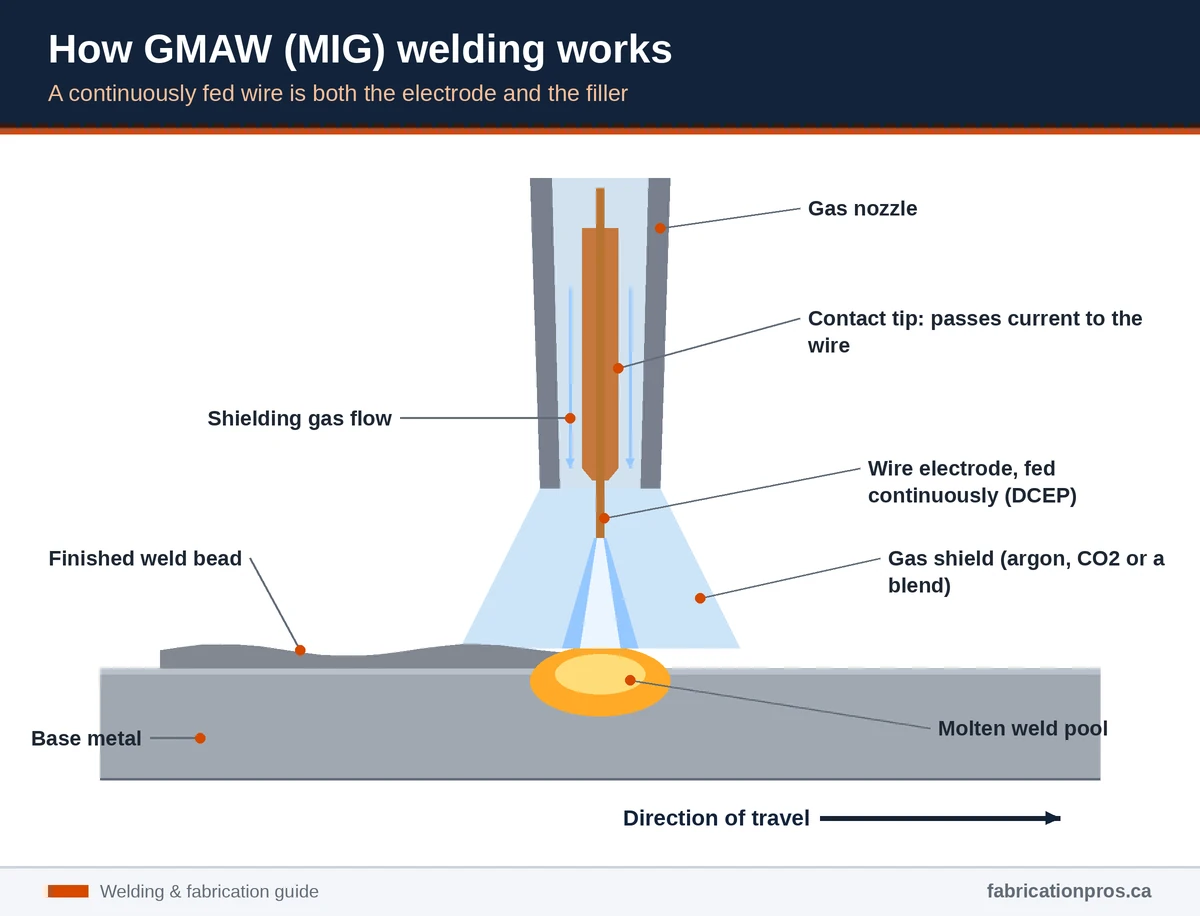
In GMAW welding, a continuous wire electrode is fed through a welding gun, creating an electric arc between the wire and the metal surface. The heat from the arc melts both the wire and the base metal, forming a strong joint.
A shielding gas, typically argon, carbon dioxide, or a blend of both, protects the molten weld pool from atmospheric contamination — ensuring a clean, stable, and high-quality weld.
A quick note on the names: strictly speaking, “MIG” describes welding with an inert gas such as argon, while blends containing carbon dioxide are sometimes called MAG (metal active gas) welding. In most North American shops, all of these variations are simply called MIG, and GMAW is the formal name that covers them all. Pure argon is the usual choice for aluminum, while steel is normally welded with CO2 or an argon and CO2 mix.
Because the wire is continuously fed, GMAW welding allows for faster weld speeds and longer continuous welds compared to other methods like TIG or stick welding.
Benefits of GMAW Welding
GMAW welding offers numerous advantages that make it one of the most popular choices across industries:
- Fast and Efficient: The continuous wire feed allows for quick, consistent welding with minimal downtime.
- Easy to Learn and Use: Suitable for both skilled professionals and beginner welders.
- Versatile Applications: Works well on carbon steel, stainless steel, and aluminum.
- Clean Results: Minimal spatter and post-weld cleanup.
- Cost-Effective: High productivity and low waste make it an economical option for many projects.
Where GMAW Welding Is Used
Because of its reliability and adaptability, GMAW welding is used across a wide range of industries, including:
- Automotive repair and manufacturing
- Construction and structural steel fabrication
- Equipment manufacturing and metal production
- Custom metal fabrication and repair
- Pipeline and industrial applications
GMAW vs. TIG Welding: What’s the Difference?
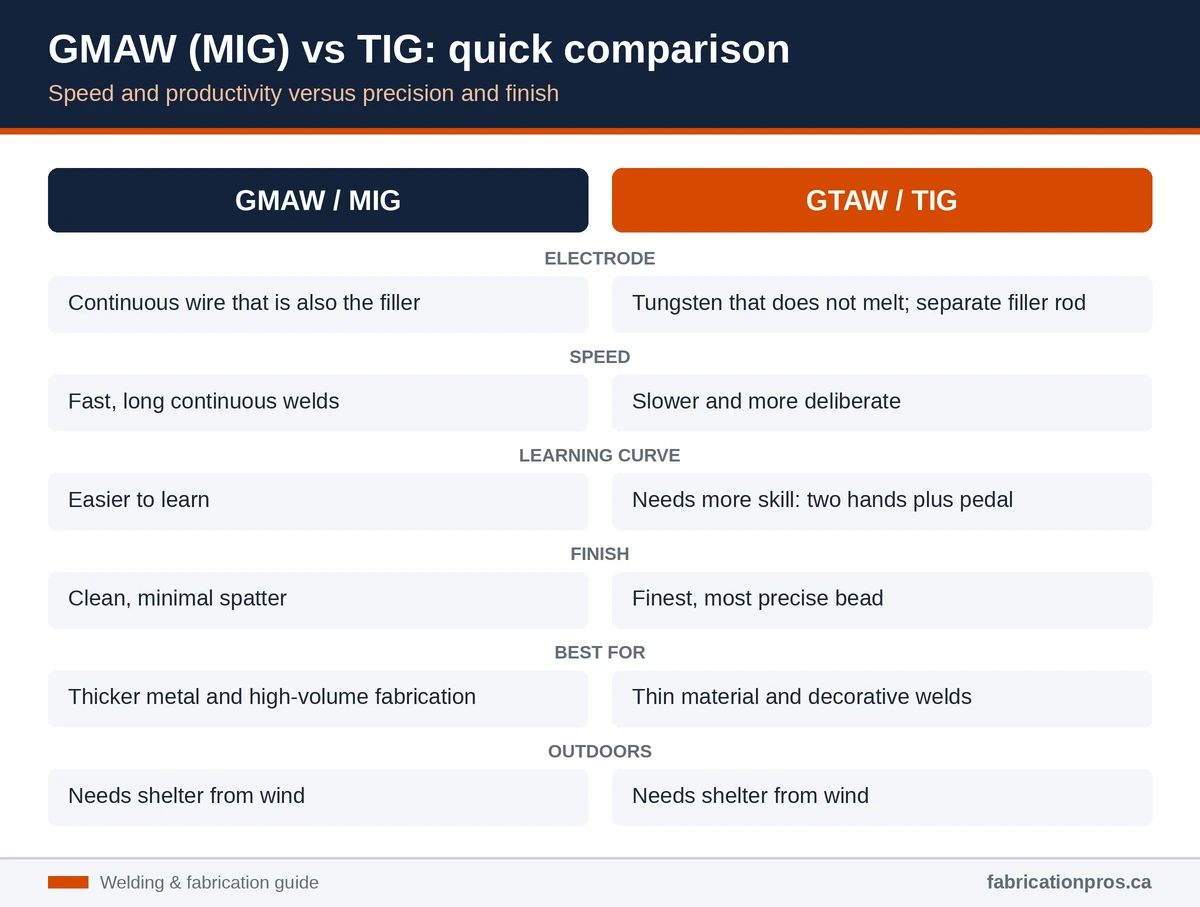
While TIG welding offers superior precision and aesthetics, GMAW welding stands out for its speed and productivity. TIG is ideal for thin materials and decorative welds, whereas GMAW is preferred for high-volume fabrication and thicker metals.
Choosing the right method depends on your project’s needs — whether that’s fine detail work or large-scale production.
Where GMAW Has Limits
Because GMAW relies on an external shielding gas, a strong breeze can blow that gas away from the weld pool and leave porosity (small gas pockets) in the finished weld. That makes standard MIG welding best suited to a shop or a sheltered area. For windy job sites and outdoor repairs, welders often switch to self-shielded flux-cored wire or stick electrodes, which carry their own protection. You can read more about those options in our guide to flux core arc welding (FCAW) and our quick guide to SMAW stick welding.
Surface condition matters too. GMAW performs best on clean metal, so rust, mill scale, paint and oil should be removed from the joint first. Very thick sections may also need several passes or joint preparation such as bevelling to get full fusion.
Learn More About MIG Welding
This article is a short introduction to what GMAW is. If you want to go deeper, our complete guide to MIG welding, wire types and best practices covers equipment, filler wires and technique in detail, and our MIG welding tips for cleaner, stronger welds focuses on practical adjustments at the machine.
Professional GMAW Welding Services
At Fabrication Pros, we specialize in GMAW welding services that deliver strong, consistent, and clean welds for projects of all sizes. Our Calgary welding company has extensive experience in the industry and is known for high quality welds. Our experienced welders use state-of-the-art equipment to ensure your components meet the highest standards of quality and durability.
Whether your project calls for aluminum welding, stainless steel welding or structural steel fabrication, we can recommend the right process for the job. If the work cannot come to our shop, ask about our mobile welding repair service, or contact us to request a quote.
Contact us with any questions you may have.