Calgary’s Trusted Welding Experts Explain How to Choose the Right Filler Metal
Overview
When welding aluminum, choosing the right electrode or filler rod can make all the difference in the strength, appearance, and performance of your weld. For welders and fabricators in Calgary, Alberta, two of the most common choices are 5356 aluminum electrodes and 4043 aluminum electrodes.
While they may look similar, these two filler metals behave very differently — and choosing the wrong one for your application can lead to cracking, corrosion, or weak joints. At Fabrication Pros, Calgary’s local mobile and rig welding specialists, we’re breaking down the key differences between 5356 and 4043 aluminum to help you make the right choice for your project.
Understanding Aluminum Filler Metals
Aluminum is lightweight, strong, and corrosion-resistant — but it’s also one of the more challenging metals to weld. Different aluminum alloys require specific filler materials that match or complement their composition.
That’s why choosing between 5356 and 4043 aluminum filler metals isn’t just about preference — it’s about ensuring weld integrity and long-term performance.
4043 Aluminum Electrodes: The Go-To for General Aluminum Welding
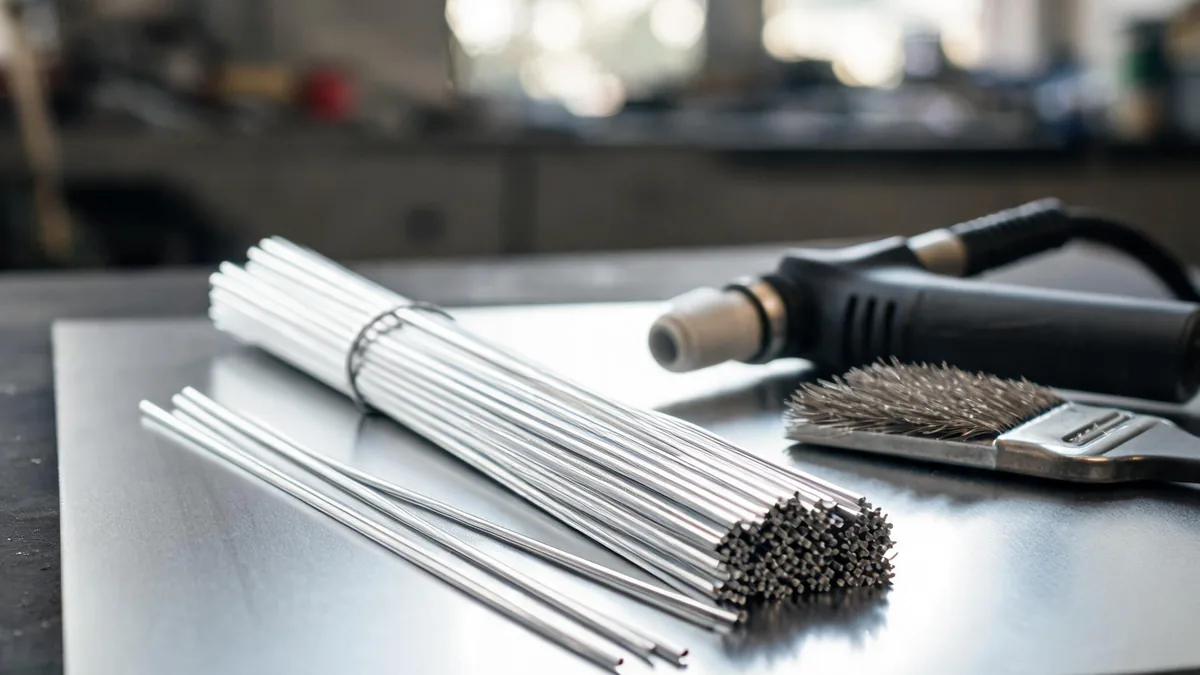
4043 is one of the most widely used aluminum filler materials in welding. It’s an aluminum-silicon alloy, containing around 5% silicon, which gives it excellent flow characteristics and crack resistance.
Key Benefits of 4043 Aluminum:
- Excellent fluidity — easier to work with for smooth, clean weld beads
- Reduced cracking risk due to added silicon
- After anodizing, a darker gray/charcoal finish than the surrounding aluminum; 5356 usually gives a closer color match
- Compatible with 3000, 4000, 6000 series aluminum alloys
Common Uses:
- General aluminum fabrication and repair
- Automotive and trailer manufacturing
- Welding aluminum piping and sheet metal
- Ideal for welding 6061 aluminum and other 6xxx alloys
4043 is often useful for general aluminum welding on compatible alloys because of its fluid weld pool and relatively low hot-cracking tendency on many 6xxx alloys — a major advantage for custom fabrication and repair work.
5356 Aluminum Electrodes: Designed for Strength and Corrosion Resistance
5356 aluminum filler metal is an aluminum-magnesium alloy, containing about 5% magnesium. It’s specifically engineered for high-strength, corrosion-resistant welds, especially in marine or outdoor applications.
Key Benefits of 5356 Aluminum:
- Superior strength compared to 4043
- Outstanding corrosion resistance, especially in saltwater or harsh environments
- Higher strength and typically higher ductility than 4043 weld metal, where compatible with the base alloy and service conditions
- Compatible with 5052, 5083, 5652, and other magnesium-bearing alloys
Common Uses:
- Marine and boat fabrication
- Truck bodies and aluminum trailers
- Irrigation systems and outdoor structures
- Industrial and heavy equipment applications
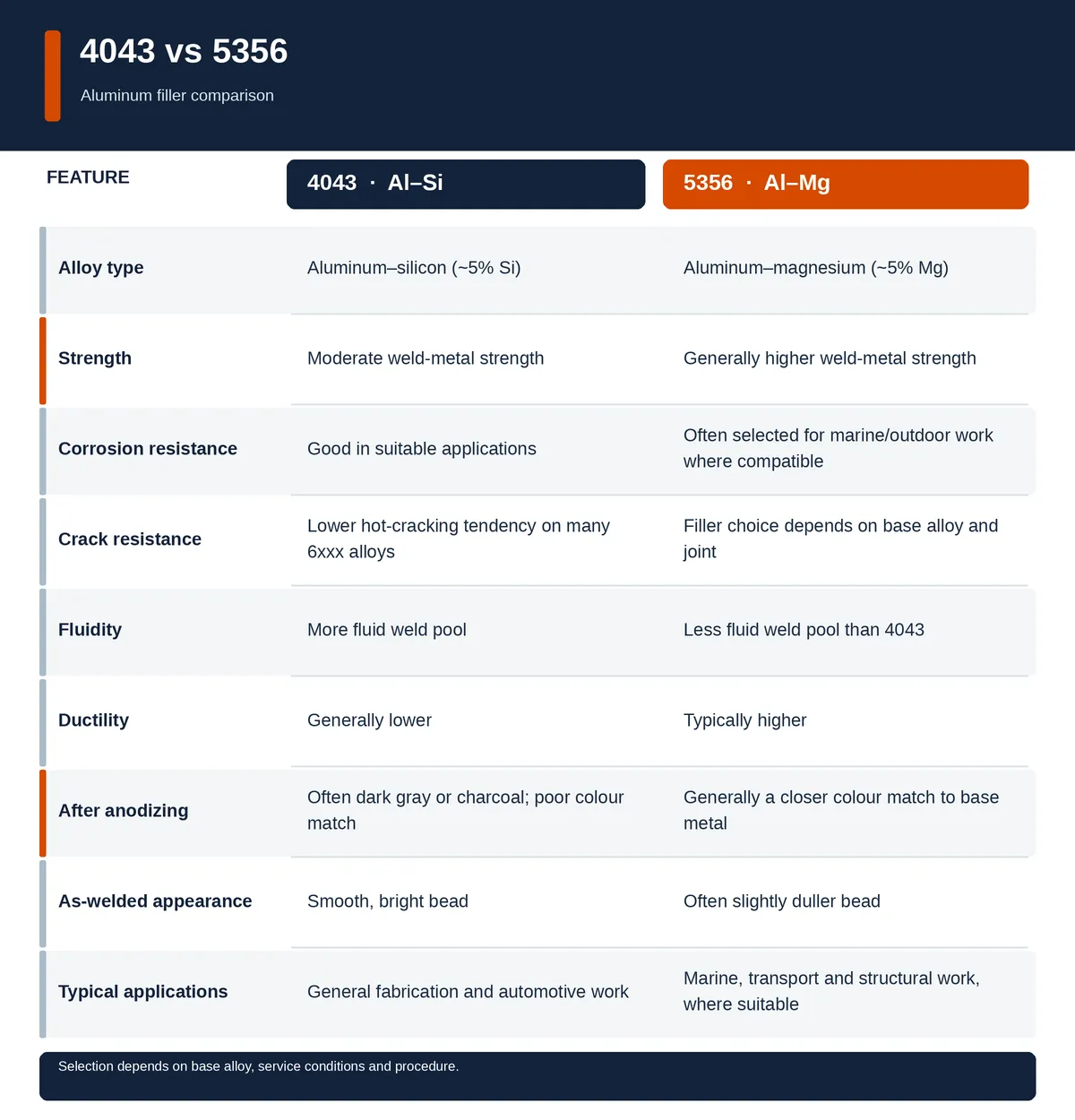
However, it’s important to note that 4043 often has a lower hot-cracking tendency on 6xxx alloys such as 6061, while 5356 is commonly selected where higher weld strength or a closer anodized color match is needed. Check the base alloy and application before choosing.
The Key Difference Between 4043 and 5356
| Feature | 4043 Aluminum | 5356 Aluminum |
|---|---|---|
| Alloy Type | Aluminum-Silicon | Aluminum-Magnesium |
| Strength | Moderate | High |
| Corrosion Resistance | Good | Excellent |
| Crack Resistance | Excellent | Moderate |
| Ductility | Generally lower | Typically higher |
| After anodizing | Often dark gray/charcoal; poor color match | Generally closer color match to the base metal |
| Typical Applications | General fabrication, automotive | Marine, transport, structural |
| As-welded appearance | Smooth, bright | Slightly duller, stronger bead |
Choosing the Right Electrode for Your Job
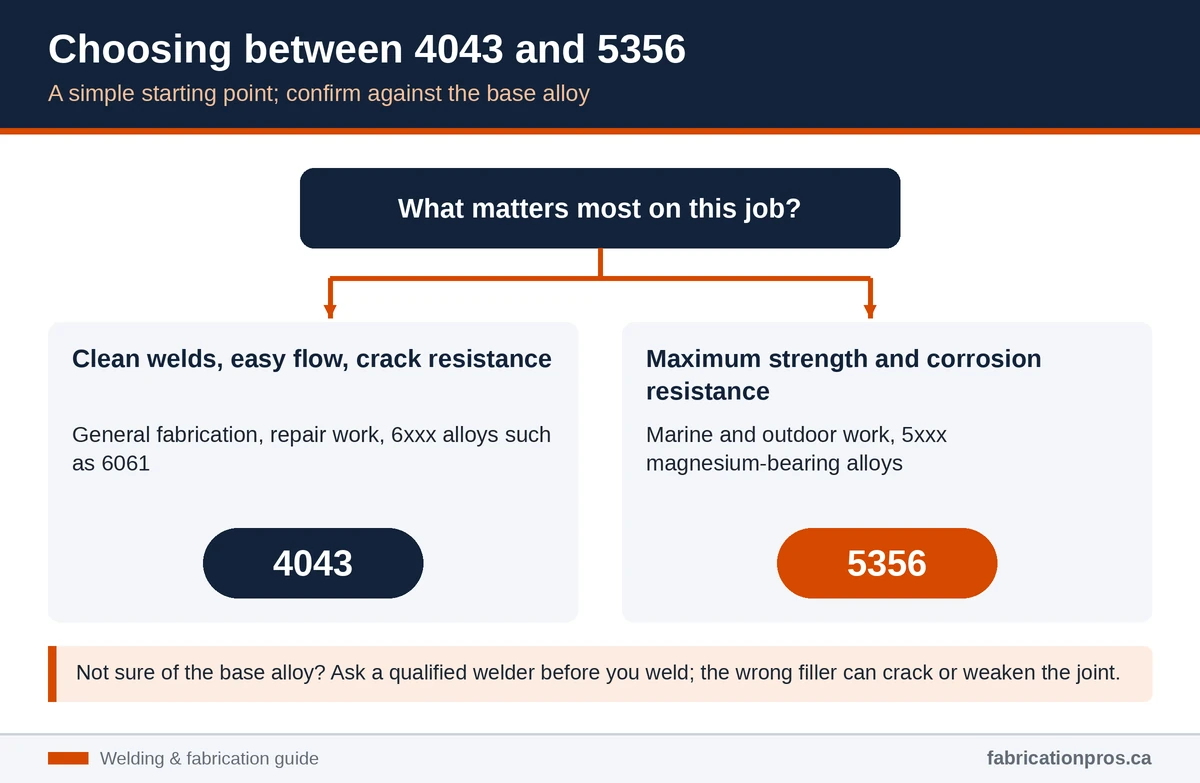
If your project requires maximum strength and corrosion resistance, especially in marine or outdoor environments, 5356 aluminum electrodes are your best choice.
If you’re working on general fabrication, repair work, or welding 6xxx series aluminum, 4043 electrodes will give you cleaner welds, easier workability, and better crack resistance.
When in doubt, consult a qualified welder or welding engineer who understands how filler metal selection affects performance, especially under Alberta’s tough working conditions.
Professional Aluminum Welding Services in Calgary, Alberta
At Fabrication Pros, we provide expert aluminum welding, fabrication, and repair services for contractors, industrial operators, and equipment owners throughout Calgary and Southern Alberta.
Our certified rig welders use the right electrodes, processes, and techniques for your specific alloy and application — ensuring strong, clean, and long-lasting welds every time.
Request a free quote online to learn how we can help with your aluminum welding and fabrication projects.
Contact us with any questions you may have.